Start with the shed’s contents, not the walls. Remove personal records, fuel, paint, pesticides, propane cylinders, and anything you plan to keep. Then photograph the structure, its base, and the full route to the street.
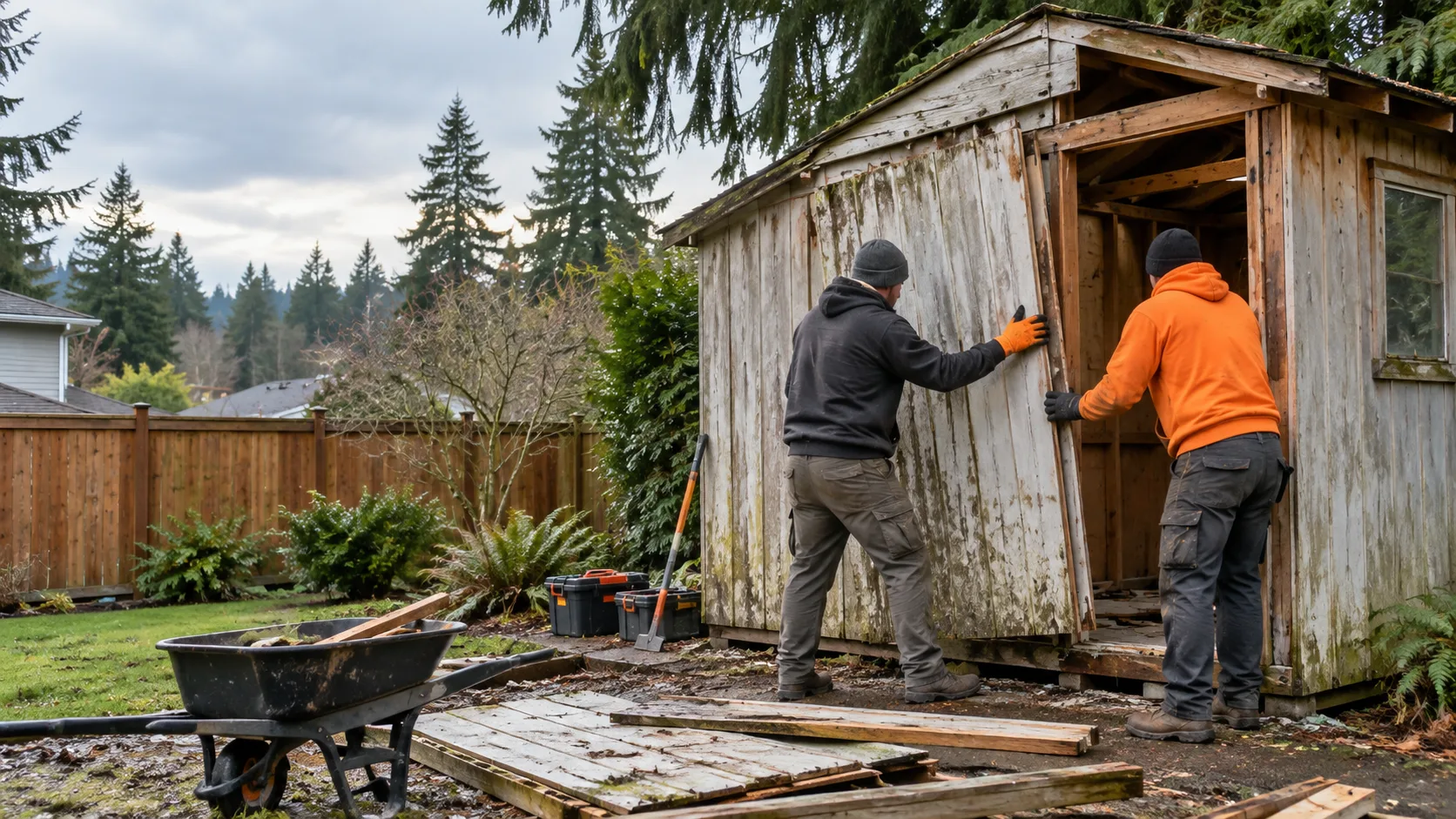
A useful photo set
Take one photo of each exterior wall, one inside the shed, one of the floor or base, and a continuous set showing the path to the loading area. Include gates, steps, slopes, low branches, and narrow turns.
What to separate before the crew arrives
Keep chemicals, fuel, batteries, compressed-gas cylinders, and suspected hazardous material apart from ordinary contents. Ask about acceptance before the appointment. Do not disturb material that may contain asbestos.
Wood-shed preparation checklist
Confirm the shed is detached. Disconnect or identify utilities. Empty valuables and personal items. Measure the narrowest gate. Move vehicles away from the loading route. Point out irrigation, fragile plants, and buried features.
Photos, measurements, access notes, material, contents, base, and any utility or hazardous-material concern.
For current permit questions, check the authority responsible for the property. For Kent projects, the City of Kent’s permit guidance is the starting point.